


People with disabilities rely heavily on websites for information and services, yet web barriers prevent them from accessing all resources and programs offered online – similar to how physical obstacles like steps prevent them from entering a building.
Tech companies in Pittsburgh recommend adopting these seven tips for accessible website design to create functional designs and work toward ADA compliance.
1. Use Text Only
Many visitors to websites have disabilities — visual, auditory, cognitive, speech, motor and more. These disabilities may be temporary or permanent and sudden or gradual in onset; many use assistive technology in order to use the web and computing devices effectively.
Accessibility in website development means making the content perceivable, operable, understandable and robust – which includes making sure the forms and buttons can be understood by those using assistive technologies like screen readers.
Make sure all forms have appropriate labels with their “Submit” button being easily identifiable via color or shape. Also ensure there are text alternatives (alt text) for non-text content which convey its meaning as the web page text; use semantic HTML for this task!
2. Make it Responsive
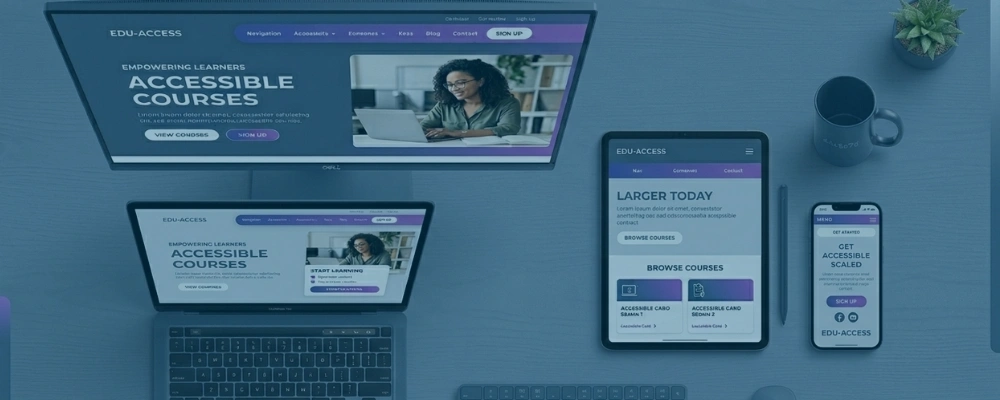
Many websites are inconveniently non-responsive, leaving visitors with text that’s difficult to read or buttons that are hard to press. A site designed with responsive technology automatically adjusts itself according to different screen sizes for optimal use by all.
Responsive web design utilizes flexible grid layouts, media queries and images that resize without distortion to produce web pages that are both easily navigable and visible – an essential feature in today’s web environment.
People with disabilities frequently rely on assistive technologies, like screen readers, to navigate and interact with websites online. A website should be designed so it is accessible by all, using this type of technology; well-written descriptive text for images should be included wherever necessary and it would be wise to avoid “keyboard traps” like scrolling banner ads or autoplay videos as much as possible.
3. Make it Easy to Read
Assistive technologies allow many users to access websites and online content; if these technologies are not optimized properly for websites, important information can become inaccessible, creating barriers to service delivery and compliance risks for local government agencies.
Simple website designs are often the best way to ensure people of all abilities can understand page content. When using color to convey important messages (for instance red text indicating required form fields), make sure there is sufficient contrast between background and text or consider alternative text instead.
Content that repeats across pages should also be avoided, with skip buttons on web forms to allow users to bypass unnecessary repetition and help make the website easily navigable and readable for screen readers and other assistive technology.
4. Make it Easy to Navigate

Your website should feature accessible features to improve usability for everyone – not only those with disabilities. Clear headers help screen readers identify the structure of a page; proper color contrast allows those with red-green color blindness to better perceive content more easily.
Image descriptions (alt text) are an integral component of accessibility features that ensure screen readers can understand visuals, and are also an SEO best practice. Video should include closed captioning and transcripts so all users have access.
Skip links provide convenient shortcuts when browsing long pages; keyboard-only users may easily bypass navigation items with this method of navigation.
5. Make it Easy to Find
An accessible website is key to making sure all visitors can locate the information they require, from easy navigation and proper structure to avoiding PDFs that can be challenging on mobile devices and for people using screen readers.
Doing what’s right and creating an accessible website aren’t mutually exclusive goals; having one can also protect against being sued. The Web Content Accessibility Guidelines serve as a set of standards for web professionals, assistive technology developers and users working on accessible web design so that all sites can be constructed to be more inclusive and user friendly.
6. Make it Easy to Use
The Web was designed to work for everyone regardless of hardware, software, language or location; however, many website visitors have physical and cognitive disabilities that restrict them from engaging with content on traditional computers, tablets and smartphones.
Design of your website has the ability to either make it easier for or hinder users from understanding its information, so making your site user-friendly is paramount.
Make sure your pages feature adequate color contrast to allow readers with limited vision or red-green color blindness to read text easily. Add visual headings to divide sections, and ensure form fields can be accessed using keyboard input rather than mouse clicks.
Communicate clearly any format requirements such as required field lengths or submission deadlines.
7. Make it Easy to Share

People with disabilities who visit websites rely on assistive technologies that convert text to speech and provide non-visual navigation commands. Well-written hyperlink text acts as a digital signpost that guides users from one page to the next.
Text that is either too short or poorly descriptive hinders user journeys and makes it hard for them to understand where a link leads. Furthermore, screen reader users should avoid clicking links that open in new windows as this can disorient them.
Web accessibility is both the right and profitable thing to do. Disabled people rely heavily on public services and businesses that make information available online; so it is only fair that these organizations provide accessible websites.
Furthermore, accessibility standards provide web professionals and assistive technology developers and agencies such as Halal Outreach with consistent guidelines to follow with consistent rules to work under, leading to consistent results across platforms and devices.